

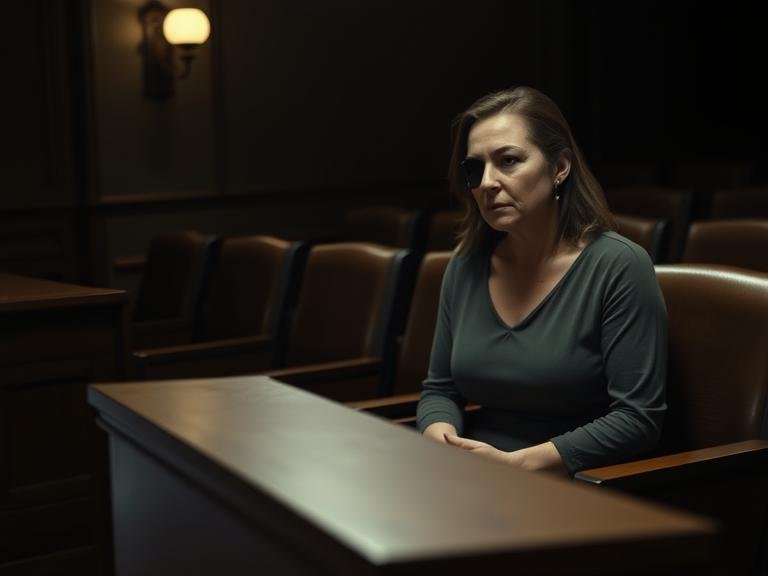
The idyllic image of a quiet, upscale home in Bethlehem, New York, was shattered in the early morning hours of November 15, 2006. What unfolded inside 8 Brockley Drive was a scene of unimaginable violence, a crime that would not only claim two lives but also tear a family apart in the most public and painful way. At the center of the storm was Joan Porco, a woman left for dead, who became both a victim and a pivotal, silent witness in the prosecution of her own son. The case of Joan Porco is not just a murder mystery; it is a profound and tragic exploration of trauma, memory, and the complex, often contradictory, bonds of family.
Table of Contents
The Night the Axe Fell: A Suburban Nightmare
Peter and Joan Porco were, by all accounts, a respected and well-liked couple. Peter was a senior attorney for the New York State Court of Appeals, and Joan was deeply involved in her community and church. They lived a comfortable life in their colonial-style home, a symbol of their achieved American dream. Their two adult sons, Christopher and Jonathan, were both out of the house, building their own lives.
The tranquility was brutally interrupted when a newspaper delivery driver, noticing the day’s papers piling up and a light on in the house, grew concerned and called the police. Upon entering, officers discovered a horror scene. Peter Porco, 52, was dead in his bed, bludgeoned and hacked with such force that an axe and a hatchet were left embedded in his head and body. Joan Porco, 54, was alive but barely, suffering from severe head trauma, multiple facial fractures, and a devastating brain injury. She had also been attacked with the same weapons.
The initial investigation pointed to a vicious, personal attack. There were no signs of forced entry, suggesting the assailant was either known to the victims or had been let in willingly. The brutality of the crime indicated intense rage, and the fact that valuables were left untouched ruled out a simple robbery. From the outset, detectives focused on the family circle.
The Investigation Zeroes In: A Son in the Crosshairs
The investigation quickly converged on the Porcos’ younger son, Jonathan. At 22, he was a student at the University of Rochester, known to have significant financial troubles. Evidence began to mount against him with startling speed:
- Financial Motive: It was discovered that Peter Porco had recently confronted Jonathan about forging checks to pay off his mounting debts. Peter had stopped the checks and was forcing Jonathan to repay the money, creating a powerful motive.
- Cell Phone Evidence: Jonathan’s cell phone records placed him far from his university campus on the night of the murder. Contrary to his initial statements, the pings indicated his phone was moving along the New York State Thruway toward Albany and, crucially, in the vicinity of his parents’ home around the time of the attacks.
- The E-ZPass Transponder: The most damning piece of evidence was the electronic toll record from his car’s E-ZPass. It provided an undeniable digital footprint of his journey from Rochester to Bethlehem and back on the night of the murders, a nearly 400-mile round trip.
- A Witness Statement: A friend of Jonathan’s testified that Jonathan had asked him to provide a false alibi, claiming they had been together watching movies that night.
The prosecution constructed a narrative of a spoiled son, enraged by his father’s financial crackdown, who drove through the night to eliminate the problem. They alleged he used his own key to enter the home, attacked his parents as they slept, and then drove back to Rochester, believing he had left no witnesses.
Joan Porco: The Survivor and the Unwilling Witness
The most haunting element of the entire case was Joan Porco. The attack left her with catastrophic injuries. She underwent multiple surgeries, lost an eye, and suffered severe damage to the part of her brain responsible for memory, speech, and cognition. Her survival was a medical miracle, but her ability to participate in the quest for justice was profoundly compromised.
In a now-famous and deeply unsettling incident, while she was still hospitalized and heavily medicated, a detective leaned over her bed and asked, “Who did this to you, Joan?” According to the officer, she mouthed a single, barely audible word: “Jonathan.”
This alleged statement became the center of a massive legal and ethical battle. The defense argued it was unreliable—the product of a severely damaged brain, heavy medication, and suggestive questioning. They contended she was in no condition to form a coherent thought, let alone accurately identify her attacker. The prosecution, however, fought to have it admitted as a “dying declaration,” a legal exception to the rule against hearsay.
Ultimately, the judge ruled the statement inadmissible. Joan Porco’s physical survival meant it did not technically qualify as a dying declaration, and her cognitive state made its reliability too questionable for a jury to hear. This ruling was a significant blow to the prosecution, but they pressed on with the mountain of circumstantial evidence.
The Trial and Its Aftermath: A Family Divided
Christopher Porco, the older brother, stood by Jonathan from the beginning, publicly maintaining his innocence. Joan Porco, as she began a long and arduous recovery, also stood by her son. She attended the trial, her physical presence a constant, painful reminder of the crime. She never wavered in her support for Jonathan, creating a stark and painful divide: the entire weight of the judicial system against the unwavering belief of a mother.
In 2006, Jonathan Porco was convicted of the second-degree murder of his father and the attempted murder of his mother. He was sentenced to 50 years to life in prison.
For Joan Porco, the verdict was a second catastrophe. Not only had she lost her husband and her health, but she also lost her son to the prison system, convinced of his innocence until her death in 2022. She lived the remainder of her life in the shadow of that one night, a victim multiple times over.
Enduring Questions and a Legacy of Pain
The Porco case continues to fascinate and disturb because it resists a clean, comfortable resolution. The circumstantial evidence against Jonathan Porco was, and remains, overwhelming. The E-ZPass and cell phone data paint a nearly inescapable picture of his guilt.
Yet, the human element—the image of a mother standing by the son accused of nearly killing her—creates a powerful cognitive dissonance. How could a victim so steadfastly support her attacker unless she, in some deep, perhaps inaccessible part of her damaged mind, knew he was innocent? Or was her support a tragic manifestation of denial, a psychological survival mechanism too powerful to overcome?
The case leaves us with unanswerable questions about the nature of memory, the limits of maternal love, and the final, elusive truth of what truly happened inside 8 Brockley Drive. It serves as a grim reminder that the aftermath of violence is a life sentence for the survivors, trapped in a prison of trauma, loss, and unyielding doubt.
Informational FAQs
1. What was Joan Porco’s condition after the attack?
Joan Porco survived but sustained life-altering injuries, including severe traumatic brain injury, the loss of an eye, and multiple facial fractures. Her cognitive and memory functions were permanently impaired, and she required extensive, lifelong medical care.
2. What was the “dying declaration” and why was it ruled inadmissible?
A “dying declaration” is a statement made by a victim who believes they are about to die, which can be used as evidence in court. Joan Porco allegedly mouthed “Jonathan” when asked who attacked her. The judge ruled it inadmissible because she was not actually dying at that moment (she survived), and her severe brain injuries and medication made the statement unreliable.
3. Where is Jonathan Porco now?
Jonathan Porco is currently incarcerated in a New York State prison. His most recent appeal for a new trial was denied in 2022. He will be eligible for parole in 2056.
4. Did Joan Porco ever recant her support for her son?
No, publicly and according to all available records, Joan Porco never wavered in her belief that Jonathan was innocent. She supported him throughout the trial and until her death.
5. What happened to the family home?
The house at 8 Brockley Drive in Bethlehem, New York, where the murders took place, was eventually sold to new owners. It has since been significantly renovated, both inside and out, in an effort to erase the memory of the tragedy.
6. Were there any other suspects?
The police investigation focused almost exclusively on Jonathan Porco from an early stage due to the compelling circumstantial evidence. No other credible suspects were ever formally named or charged in connection with the crime.