

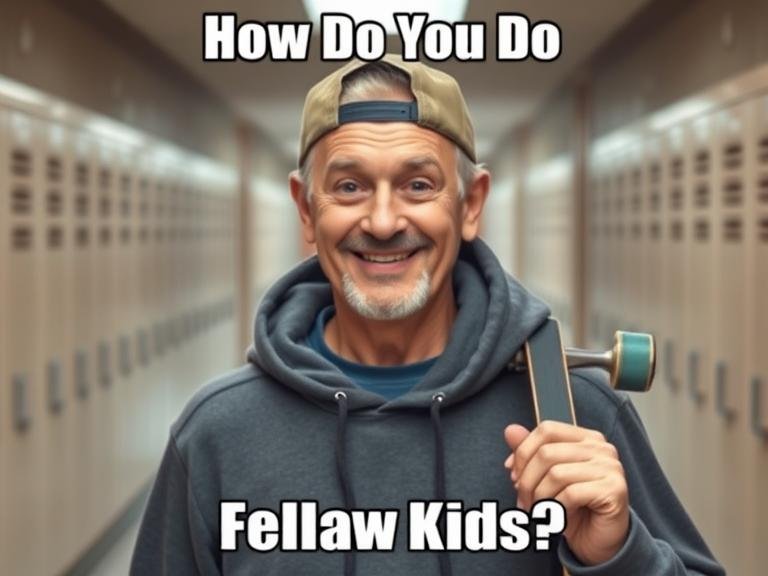
The phrase “How do you do fellow kids?” has become one of the internet’s most enduring memes, perfectly encapsulating the awkwardness of corporations (or adults) trying—and failing—to appear “cool” to younger generations. But where did this meme come from, why does it resonate so strongly, and how has it evolved?
This article explores the origins of the phrase, its cultural impact, and why attempts at forced relatability often backfire spectacularly.
Table of Contents
Origins of “How Do You Do Fellow Kids?”
1. The 30 Rock Scene That Started It All
The phrase was popularized by a 2010 episode of 30 Rock (“Black Light Attack!”) where Steve Buscemi’s character, undercover as a high school student, delivers the iconic line while dressed in an absurdly outdated outfit.
https://example.com/image.jpg (Caption: Steve Buscemi’s cringe-inducing attempt to blend in as a teen.)
2. Why This Moment Went Viral
- The delivery: Buscemi’s deadpan tone made the line hilariously awkward.
- Relatability: Everyone has witnessed an adult trying too hard to be “hip.”
- Timelessness: The joke works across generations because the struggle to stay relevant never ends.
Why the Meme Still Resonates
1. The “Hello, Fellow Youth” Phenomenon
Brands, politicians, and even well-meaning parents constantly attempt to connect with younger audiences using:
- Forced slang (“That’s bussin’, no cap!”)
- Tone-deaf trends (See: [Brand] tries TikTok dances)
- Desperate “edginess” (Corporate Twitter accounts pretending to be “sassy”)
2. Why These Attempts Fail
- Lack of authenticity: Gen Z and younger millennials spot inauthenticity instantly.
- Over-explanation: Nothing kills a joke faster than explaining why it’s funny.
- Chasing trends too late: By the time corporations adopt a trend, the internet has moved on.
3. Notable Examples of “Fellow Kids” Fails
| Brand/Figure | Cringe Moment | Why It Flopped |
|---|---|---|
| Denny’s | Weird, surreal tweets trying too hard | Felt like a dad at a rave |
| Microsoft | “How do you do, fellow teens?” Clippy meme | Forced nostalgia bait |
| Politicians | “Pokémon Go to the polls” (Hillary 2016) | Painfully outdated reference |
How to Avoid Being a “Fellow Kids” Stereotype
If you’re a brand, content creator, or just an adult trying to understand younger audiences, here’s how to avoid cringe:
1. Don’t Force the Vernacular
- Bad: “Y’all are vibing with our new product? Slay!”
- Better: Speak naturally—young audiences prefer honesty over performative slang.
2. Stay Updated (But Don’t Chase Every Trend)
- Bad: Jumping on a meme that’s already dead (e.g., “What’s the deal with airplane food?” energy).
- Better: Observe what’s organically popular before engaging.
3. Let Younger Creators Lead
- Instead of awkwardly mimicking trends, collaborate with Gen Z influencers who actually understand the culture.
The Evolution of the Meme
While “How do you do, fellow kids?” started as a jab at corporate pandering, it has since morphed into:
- Self-aware humor: Brands now intentionally use the meme to show they’re in on the joke.
- Meta-commentary: A way to critique lazy marketing tactics.
- A cultural shorthand: For any awkward attempt at fitting in.
FAQs About the “Fellow Kids” Meme
Q1: Who originally said “How do you do, fellow kids?”
A: Steve Buscemi’s character in 30 Rock, though similar jokes existed before.
Q2: Why do brands keep failing at youth marketing?
A: They often rely on stereotypes rather than genuine engagement.
Q3: Has any brand successfully pulled off “fellow kids” energy?
A: Rarely—Wendy’s Twitter succeeded by being authentically snarky, not forced.
Q4: Is the meme still relevant in 2024?
A: Yes, because companies still make the same mistakes.
Q5: Can older generations ever connect with youth culture authentically?
A: Yes—by listening rather than pretending. (See: Keanu Reeves, the internet’s “cool dad.”)
Final Thoughts
The “How do you do fellow kids?” meme endures because it highlights a universal truth: Authenticity will always beat forced relatability. Whether you’re a brand, a parent, or just someone trying to navigate internet culture, the key isn’t to mimic—it’s to understand.