

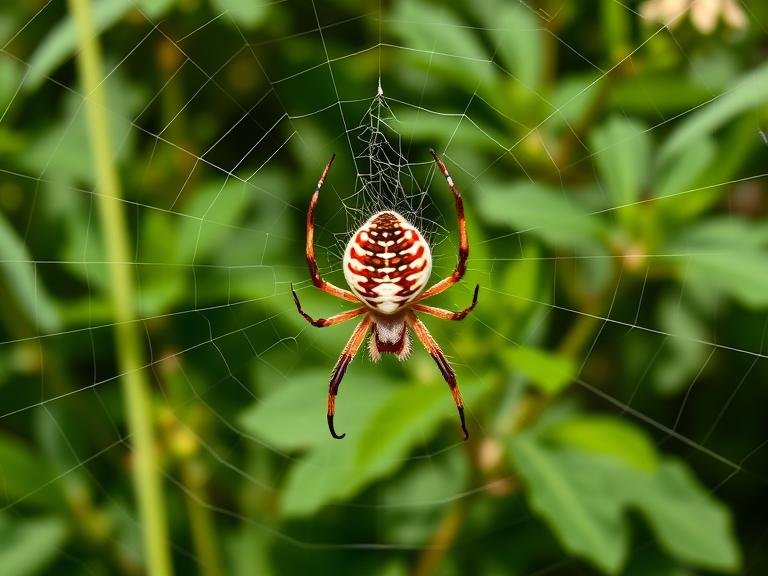
The spiny backed orb weaver is one of nature’s most visually striking and unusual spiders. Known for its brightly colored, spiny abdomen, this tiny creature often captures the attention of curious observers in gardens, forests, and even backyards. Despite its somewhat intimidating appearance, this spider is harmless to humans and plays an essential role in controlling insect populations.
Table of Contents
Physical Characteristics of the Spiny Backed Orb Weaver
Unique Appearance
The spiny backed orb weaver stands out from other spiders due to its flattened, hard-shelled abdomen covered with spines. These spines typically range from six to eight in number, depending on the species and individual variation.
- Colors: They often display bright hues of white, yellow, red, or black, making them look like tiny, living jewels in the web.
- Size: Females are larger, usually about 5–9 millimeters long, while males are significantly smaller and lack the striking spines.
Sexual Dimorphism
One of the fascinating aspects of this spider is the difference between males and females. Males are often overlooked due to their plain coloration and much smaller size, while females carry the iconic spiny appearance.
Habitat and Distribution
Global Range
The spiny backed orb weaver is found in warm and tropical climates across the globe. They are particularly common in:
- The southeastern United States
- Central and South America
- The Caribbean
- Parts of Asia and Africa
Preferred Environment
These spiders thrive in environments where they can build large, sturdy webs. Gardens, forests, and areas with abundant vegetation provide ideal hunting grounds for them. They often position their webs in open areas where flying insects are most likely to get trapped.
Web Construction and Hunting Behavior
The Orb Web
As their name suggests, spiny backed orb weavers are expert builders of orb-shaped webs. These circular webs can span several feet in diameter and are strategically placed to capture flying insects like flies, mosquitoes, and moths.
Role in Pest Control
By catching large numbers of insects, these spiders serve as natural pest controllers, reducing the population of insects that can damage crops or spread diseases.
Life Cycle and Reproduction
Mating
During mating season, males carefully approach females, often signaling with vibrations on the web to avoid being mistaken for prey.
Egg Sacs
Females lay their eggs in a silken sac that is usually attached to nearby vegetation. Each sac can contain hundreds of eggs, ensuring the continuation of the species.
Life Span
The life span of a spiny backed orb weaver is relatively short—about one year. Adults typically die after laying eggs, while the new generation hatches in spring to repeat the cycle.
Ecological Importance
Balancing Ecosystems
The spiny backed orb weaver is an important part of ecosystems because it helps maintain insect populations. Without predators like these spiders, insect numbers could rise unchecked, leading to imbalances in food webs.
Non-Threatening to Humans
Despite their unusual and somewhat fearsome appearance, spiny backed orb weavers pose no danger to humans. Their venom is not harmful to people, and they are more interested in catching insects than interacting with humans.
Cultural Significance and Human Perception
Misunderstandings
Many people mistakenly fear these spiders because of their spiny, armored look. However, their bold colors and unusual shape are actually part of a defense strategy, deterring predators who may mistake them for something dangerous or inedible.
Fascination for Naturalists
For spider enthusiasts, photographers, and naturalists, the spiny backed orb weaver represents a beautiful example of nature’s creativity. Its bright patterns and striking web designs make it a popular subject of study and admiration.
How to Identify the Spiny Backed Orb Weaver
If you encounter a small, brightly colored spider with sharp spines on its back sitting in the center of a circular web, you are likely observing a spiny backed orb weaver. Key identification features include:
- Six prominent spines on the abdomen
- Flat, hardened shell-like body
- Bright red, white, yellow, or black coloration
- Webs built in sunny, open areas
Common Myths About the Spiny Backed Orb Weaver
- “It is poisonous to humans.”
False. Their venom is only effective on small insects and is harmless to humans. - “The spines can sting or puncture.”
False. The spines are only a physical defense mechanism and cannot inject venom. - “They are aggressive.”
False. These spiders are non-aggressive and typically avoid human contact.
Conservation Status
The spiny backed orb weaver is not considered endangered. In fact, it is relatively widespread in its habitats. However, habitat destruction and pesticide use can impact local populations, so promoting eco-friendly gardening and farming practices can help preserve these spiders and the ecological roles they play.
Conclusion
The spiny backed orb weaver may look fierce with its armored body and sharp spines, but it is a harmless and highly beneficial spider. With its dazzling appearance, impressive web-building skills, and vital role in controlling insect populations, this spider deserves respect and appreciation rather than fear.
By learning more about this fascinating arachnid, we can better understand the balance of our natural world and the importance of protecting even the smallest creatures that live alongside us.
FAQs About the Spiny Backed Orb Weaver
Q1: Is the spiny backed orb weaver dangerous to humans?
No, it is harmless to humans. Its venom only affects small insects.
Q2: Where can I commonly see spiny backed orb weavers?
They are frequently found in gardens, forests, and tropical regions, particularly in the southeastern United States, Central America, and the Caribbean.
Q3: Why does the spiny backed orb weaver have spines?
The spines serve as a defense mechanism, making the spider appear more intimidating to predators.
Q4: What do spiny backed orb weavers eat?
They primarily eat flying insects like flies, mosquitoes, and moths that get trapped in their orb webs.
Q5: How long do spiny backed orb weavers live?
Their life span is about one year, with females laying eggs before dying at the end of their cycle.
Q6: Do spiny backed orb weavers enter houses?
They usually remain outdoors in vegetation and are rarely found inside homes.