

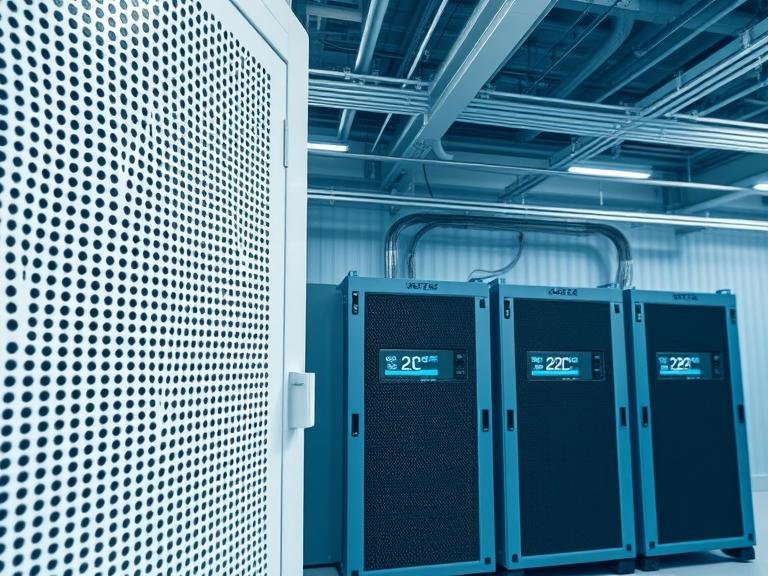
In the silent, humming halls of a modern data center, where countless servers process the world’s information, a relentless battle against heat is constantly being waged. The heartbeats of the digital age—every email sent, every video streamed, every transaction processed—generate immense thermal energy. If left unchecked, this heat would swiftly cripple sensitive electronics, causing catastrophic failures and widespread outages. Standing guard on the front lines of this thermal war is a critical piece of infrastructure: the Computer Room Air Conditioner, universally known by its acronym, CRAC.
Understanding the role, function, and evolution of the CRAC unit is fundamental to appreciating the invisible engineering that keeps our connected world running smoothly and reliably.
What Exactly is a CRAC Unit?
A CRAC unit is a specialized air conditioning system designed explicitly for environmental control in mission-critical spaces like data centers, server rooms, and network closets. Unlike comfort-oriented AC units that regulate temperature for human occupants, a CRAC unit’s sole purpose is to protect electronic equipment. It is a precision machine engineered to maintain strict, consistent levels of temperature, humidity, and air filtration 24 hours a day, 365 days a year.
The core mission of any CRAC system is heat rejection. It works by continuously drawing in warm air exhausted by servers and IT equipment, cooling it through a refrigeration cycle, and then supplying chilled, conditioned air back into the room. This creates a continuous cycle that prevents hot spots and ensures equipment operates within its manufacturer’s specified thermal envelope.
Key Components and How a CRAC Unit Works
The functionality of a CRAC unit can be broken down into a series of coordinated processes facilitated by key components:
- The Refrigeration Cycle: At its heart, a CRAC unit operates on the same basic principle as a standard air conditioner, using a compressor, condenser, expansion valve, and evaporator coil to transfer heat.
- Compressor: This is the pump of the system, circulating the refrigerant and compressing it into a high-pressure, high-temperature gas.
- Condenser Coil: Located typically on the “hot” side of the unit (or remotely outside), the condenser coil releases the heat absorbed from the data center to the outside atmosphere. Fans blow outside air across the coil to facilitate this heat transfer.
- Expansion Valve: This device meters the flow of high-pressure liquid refrigerant, causing it to rapidly expand and cool into a low-pressure, low-temperature liquid.
- Evaporator Coil: The cold refrigerant passes through this coil. A blower fan forces warm room air from the data center across the cold evaporator coil, cooling the air. As the air cools, the refrigerant inside the coil absorbs the heat and evaporates into a gas, starting the cycle anew.
- Humidifier/Dehumidifier: Precision humidity control is just as critical as temperature control. Too much humidity can cause condensation and corrosion, while too little can lead to electrostatic discharge (ESD) that can fry delicate circuit boards. CRAC units have integrated systems to add moisture (humidify) or remove it (dehumidify) as needed.
- Advanced Controls and Sensors: Modern CRAC units are intelligent. They are equipped with sophisticated microprocessors that monitor temperature and humidity via networked sensors placed throughout the data center. This allows for precise, automated adjustments to maintain setpoints and optimize energy efficiency.
CRAC vs. CRACU: A Matter of Configuration
You may also encounter the term CRAHU (Computer Room Air Handling Unit). The difference is subtle but important:
- CRAC: A direct expansion (DX) system. The refrigeration cycle and its components (compressor, condenser) are integral to the unit itself or in a closely coupled condensing unit.
- CRAHU: A chilled water system. Instead of using its own refrigerant-based cooling cycle, a CRAHU uses chilled water supplied from a central plant (like a building’s chiller) to cool the air. It has a water coil instead of an evaporator coil and relies on the external source for cooling.
The choice between CRAC and CRAHU depends on factors like the data center’s size, design, cooling capacity requirements, and energy efficiency goals. Large-scale facilities often favor chilled water CRAHUs for their efficiency, while smaller server rooms might use DX-based CRAC units for their simplicity.
The Evolution: From Cold Aisles to Modern Cooling Strategies
The deployment of CRAC units has evolved significantly. The old model involved placing CRAC units around the perimeter of a room and flooding the space with cold air—an incredibly inefficient method known as “room cooling.”
Today, best practices involve containment strategies that work in tandem with CRAC units:
- Hot Aisle/Cold Aisle: Server racks are arranged in alternating rows. The fronts (intakes) face each other (“cold aisle”), and the backs (exhausts) face each other (“hot aisle”). CRAC units draw air from the hot aisle, cool it, and supply it to the cold aisle.
- Containment: To maximize efficiency, the hot and cold aisles can be physically contained with walls and ceilings. This prevents the hot and cold air from mixing, allowing the CRAC units to work less hard and dramatically reducing energy consumption. The CRAC unit’s job becomes more focused and efficient.
The Critical Importance of CRAC Maintenance
A CRAC unit is a complex mechanical system, and its failure can lead to a data center thermal event. A rigorous preventative maintenance schedule is non-negotiable. This includes:
- Regularly cleaning or replacing air filters to maintain airflow.
- Inspecting and cleaning evaporator and condenser coils.
- Checking refrigerant levels and for potential leaks.
- Testing humidification systems and drain pans to prevent clogs and overflow.
- Verifying the calibration of all sensors and controls.
A well-maintained CRAC unit not only ensures uptime but also operates at peak efficiency, translating to significant cost savings on energy bills.
Conclusion
The humble CRAC unit is far more than just a large air conditioner. It is a precision environmental guardian, a masterpiece of thermodynamic engineering dedicated to the well-being of the machines that power our modern existence. As data centers continue to evolve, becoming denser and more powerful, the technology within CRAC units advances in lockstep, embracing greater intelligence, efficiency, and reliability. The next time you seamlessly access a cloud service or stream your favorite show, remember the silent, relentless work of the CRAC units—the unsung heroes keeping the digital world cool, stable, and online.
Informational FAQs
Q: How is a CRAC unit different from a regular home AC unit?
A: While they share a basic refrigeration principle, CRAC units are designed for 24/7 operation, offer far more precise temperature and humidity control (within ±1°F/0.5°C and ±5% RH), have higher air filtration standards, and are built with industrial-grade components for maximum reliability. Home AC units are designed for human comfort and seasonal use.
Q: What temperature should a data center be kept at?
A: The modern standard, as defined by organizations like ASHRAE (American Society of Heating, Refrigerating and Air-Conditioning Engineers), recommends a wider range than previously thought—typically between 64°F and 81°F (18°C and 27°C)—allowing for significant energy savings. The exact setpoint depends on the specific equipment and the data center’s design.
Q: Can a data center have too much cooling?
A: Absolutely. “Overcooling” is a common source of energy waste. It occurs when the CRAC units are set much lower than necessary or when airflow management is poor, causing them to work harder than needed. This drastically increases energy costs without providing any additional benefit to the equipment.
Q: What happens when a CRAC unit fails?
A: Data centers are designed with redundancy (N+1, 2N) for critical systems like cooling. If one CRAC unit fails, others should automatically ramp up to compensate for the load, preventing a temperature rise. Building management systems will immediately alert engineers to the failure so they can address it promptly. A complete loss of cooling would lead to a rapid temperature increase, potentially triggering a controlled shutdown of IT equipment to prevent hardware damage.
Q: Are there environmentally friendly refrigerants used in CRAC units?
A: Yes, the industry is continuously moving away from high Global Warming Potential (GWP) refrigerants like R-410A. Newer systems are increasingly using lower-GWP alternatives such as R-32 and R-513A, which have a much smaller environmental impact.